
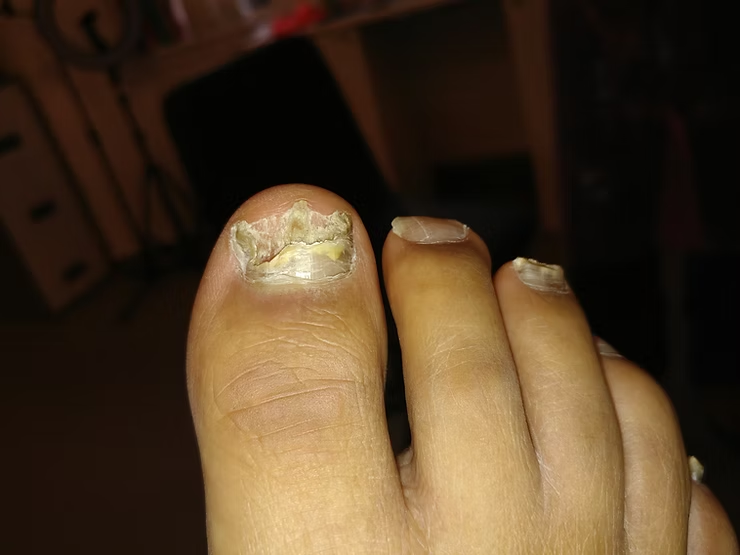
Dealing with a toe that constantly digs into your skin makes every single step down a busy pavement feel like an absolute chore. If you have already cycled through endless rounds of antibiotics or painful home trimming without success, you are likely ready for a permanent solution. When exploring your options for a definitive ingrown toenail surgery in London, you will frequently encounter a clinical term: a podiatric surgical matrixectomy.
Far from being a temporary quick fix, this specialised minor procedure focuses on correcting the underlying anatomy of the digit to stop the problem from ever returning.
Deconstructing the Source of the Problem
To understand why this method succeeds where standard clipping fails, it helps to look at how a nail actually develops. The visible, hard plate does not just appear; it is continuously produced by a hidden layer of specialised tissue sitting right beneath your cuticle, known as the germinal matrix.
With the structural pressure and incorrect trimming causing the nail edge to protrude outward, it will function as a physical splinter, pricking the tender area around it. These structural alterations lead to multiple different symptoms:
- Localised Hypertrophy: The surrounding skin thickens and swells as it tries to protect itself from the sharp keratin edge.
- Granulation Growth: Raw, highly vascular tissue forms over the wound, which can easily bleed under the pressure of everyday footwear.
While a routine trim provides temporary relief, the underlying matrix keeps producing the nail in the exact same shape. A matrixectomy solves this by permanently neutralising only the troublesome section of that root tissue.
Step-by-Step: The Clinical Process
The whole treatment process is done through a local anaesthetic, which means that the area is numbed and you will be pain-free during the procedure. After preparing the toe, the expert proceeds to lift the small, sharp nail plate border without causing any damage to the healthy central part of the nail.
Once the sharp nail plate border is removed, comes the stage where chemicals are applied. The solution is applied to the open nail tissue for precisely 60 seconds. The solution ensures that there is no further growth of cells in this particular part, leaving you with a straight nail plate.
Reclaiming Pain-Free Mobility
At Harley Medical Foot and Nail Laser Clinic, our award-winning team, led by Marion Yau, has a wealth of experience in podiatric medicine. Because we focus solely on nails and feet, we have treated nearly 3,000 satisfied patients. This specialisation means we are intimately familiar with the unique anatomy of the toe, allowing for a high level of precision when performing invasive procedures.
Our non-invasive techniques mean there are no wide wounds left behind, allowing London professionals and active individuals to return to their normal daily routines with minimal downtime. If you are ready to put an end to recurring infections and painful footwear restrictions, reach out to our team today to discuss a tailored ingrown toenail surgery in London.
Emergency Advice: We would like to kindly inform you that our clinic only practices according to regular daytime operating hours and that there is no such thing as an emergency service that runs during nighttime. In cases when there is a need for an emergency situation, such as sudden heavy bleeding and infection, one should contact NHS 111 or visit the nearest Accident & Emergency department available.