
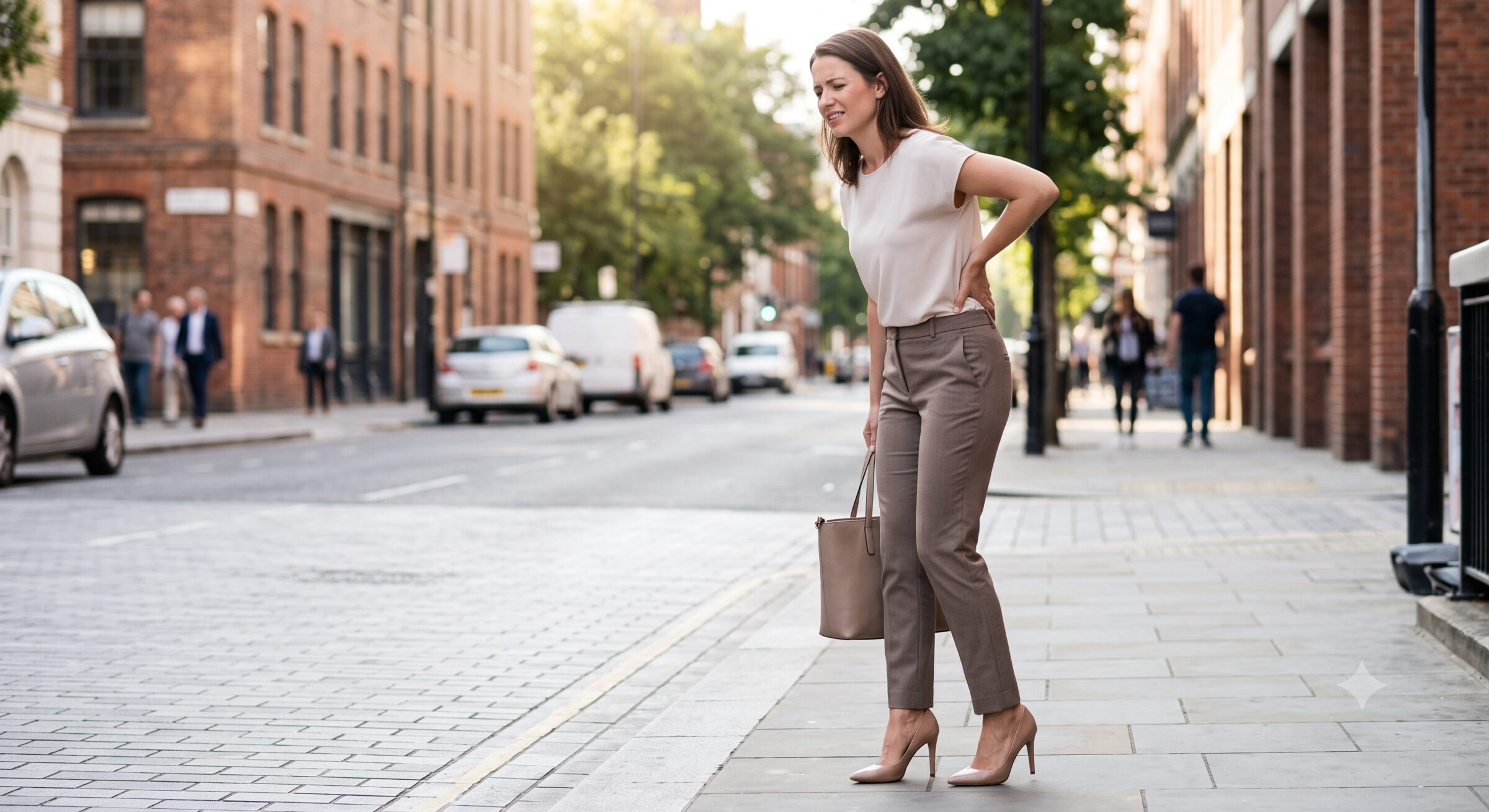
When your back starts aching, your shoes probably aren’t the first thing you blame. You might think about your desk, your mattress, or how long you’ve been sitting. But your feet can have more to do with it than you realise.
Every step you take starts at your feet. If your footwear changes the way your feet meet the ground, your legs, hips and lower back may have to adjust too. That doesn’t mean a particular pair of shoes is automatically responsible for your back pain, but as highlighted in recent health coverage on footwear and back pain, it is worth looking closely at what you wear every day..
So, which shoes deserve a second look?
1. Flip-flops
They’re brilliant for the beach. They’re less convincing as an everyday shoe.
Because they aren’t secured around the foot, you may change your stride to keep them in place. They also tend to offer little support. If you love wearing them, keep them for short periods and choose a properly fitted sandal for longer walks.
2. High heels
A little height can change quite a lot. High heels move your weight towards the front of your feet, which can alter your posture and put extra strain on the lower body.
For everyday wear, a lower, stable heel is generally a kinder option. You don’t have to give up heels completely. Just save the very high pair for occasions rather than hours of walking.
3. Ultra-flat ballet pumps
Here’s one that catches people out. Flat doesn’t always mean supportive.
Many ballet pumps have very thin soles and little arch support. If you’re walking on hard pavements for hours, that lack of cushioning can leave your feet working harder and may contribute to discomfort further up the body.
Look for a pair with a little more structure, cushioning, and support.
4. Thin, unsupportive trainers
Trainers have a reputation for being the sensible choice, but the label alone doesn’t guarantee good support.
A very flat trainer with a flimsy sole may not give your feet the stability they need. For regular walking, look for a secure heel, a supportive midsole, and enough cushioning without making the shoe feel unstable.
5. Loose sliders
Sliders can be wonderfully comfortable, particularly around the house or on holiday. The trouble starts when a loose pair becomes your main walking shoe.
If you want to wear sliders regularly, follow expert podiatrist advice on choosing supportive sliders by selecting pairs with a contoured footbed, arch support, and adjustable straps. Your foot should feel supported rather than having to grip the shoe with every step.
What should you wear instead?
There isn’t one perfect shoe for everyone. The right choice depends on your feet, how you walk, and what you’ll be doing.
As a starting point, look for:
- A secure heel and adjustable fastening
- Enough room for your toes
- Good arch support
- Moderate, comfortable cushioning
- A stable sole
- A low or modest heel for everyday wear
If your back pain keeps returning, don’t simply keep changing your shoes and hope for the best. Your footwear may be contributing to the problem, but it may not be the whole story. At Harley Medical Foot and Nail Laser Clinic, a podiatric assessment can help identify whether the way your feet function could be playing a part in your discomfort.